
Welcome to the official site of sheikhzadegan.

Situational Leadership Model from a CEO’s Perspective

Situational Leadership Model from a CEO’s Perspective

Situational Leadership Model from a CEO’s Perspective

Throughout my career as a CEO, I have encountered and applied various leadership styles. Most modern leadership theories are based on the Contingency Approach, which emphasizes the ability to adapt leadership style according to the situation. The Situational Leadership Model explains this flexibility better than any other framework, considering factors such as team maturity, motivation, timing, and leadership behavior.

What Is the Situational Leadership Model?

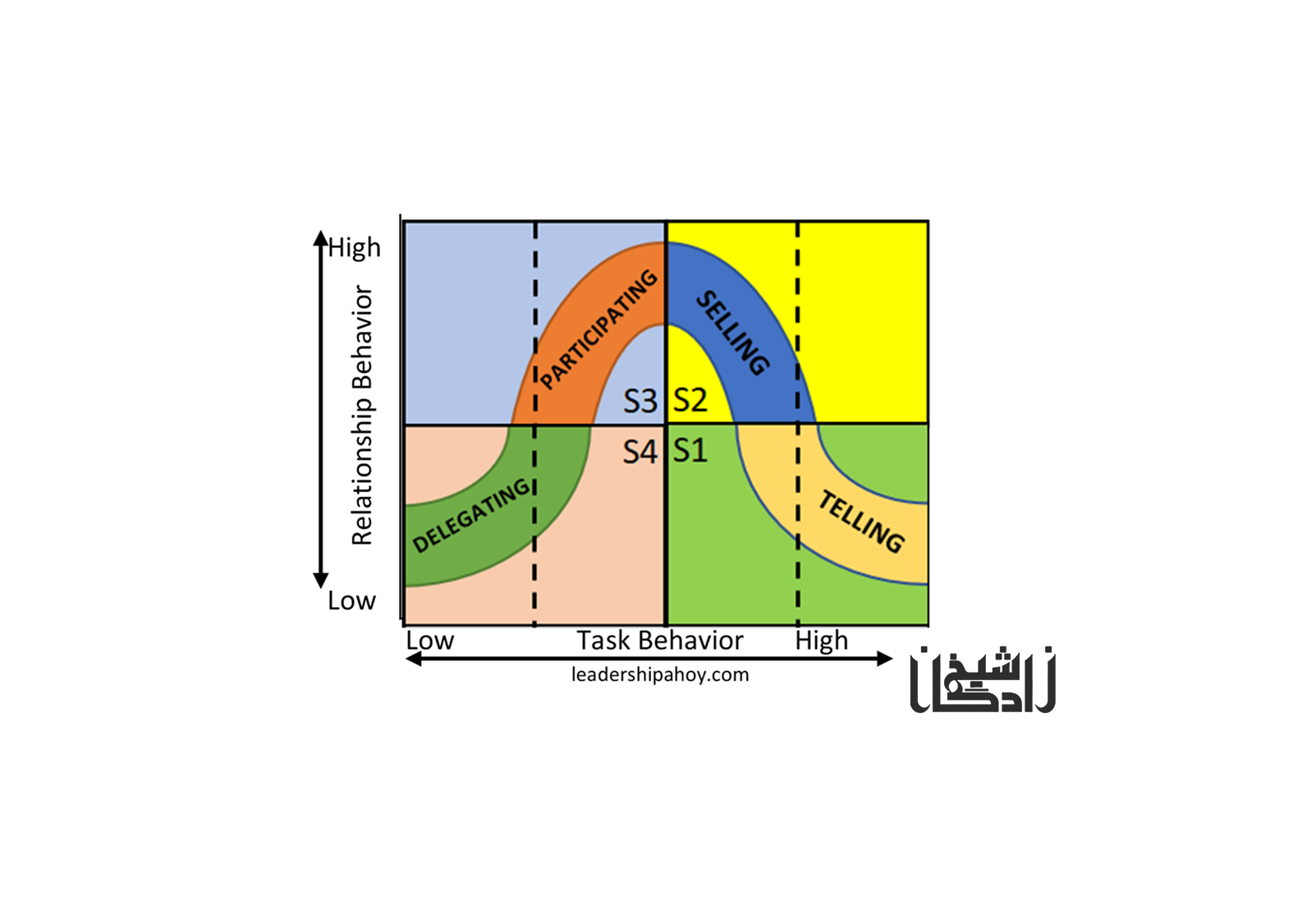
The Situational Leadership Model is a contingency-based approach that suggests leaders should adjust their leadership style depending on the readiness, skills, experience, and commitment of their team members. A situational leader may use one of four main styles: Telling, Selling, Participating, and Delegating.

The Four Leadership Styles in the Model

  • Telling (Directing):
    High task focus, low relationship focus. Ideal for inexperienced or low-skilled teams, where the leader defines what needs to be done, how, and when.
  • Selling (Coaching):
    High focus on both task and relationship. Suitable for teams with low skill levels but high motivation and willingness to learn.
  • Participating (Supporting):
    Low task focus, high relationship focus. Works best with skilled teams that may lack confidence or motivation.
  • Delegating:
    Low focus on both task and relationship. Appropriate for experienced, competent, and self-motivated teams that can make independent decisions.

The History of the Situational Leadership Model

In 1982, Dr. Paul Hersey and Dr. Ken Blanchard published “Management of Organizational Behavior: Utilizing Human Resources.”
This book introduced a new perspective on leadership that emphasized building relationships and adapting one’s leadership style to fit the situation. The approach later became known as the Situational Leadership Model.

Key Elements of the Situational Leadership Model

The model consists of the following components:

  • Two leadership behaviors: relationship-oriented and task-oriented
  • Four leadership styles: Directing, Coaching, Supporting, Delegating
  • Follower readiness and maturity: including skill, confidence, and commitment
  • Four different situations (S1–S4), each requiring a different leadership response

Leadership Behaviors

Relationship-Oriented Behavior

In this mode, the leader engages in active listening, communication, and trust-building with the team. This behavior fosters motivation, personal connection, and inspiration—requiring strong emotional intelligence and interpersonal skills.

Task-Oriented Behavior

Here, the leader focuses on defining clear tasks, setting policies, and monitoring performance. This involves supervision, feedback, and ensuring standards are met. Overemphasis on this style, however, can lead to an overly directive or pressuring leadership environment.

Follower Readiness and Maturity

Hersey and Blanchard identified four maturity levels among followers:

  1. Able and Willing: High skill, high confidence, high commitment
  2. Unable and Unwilling: Low skill, low confidence, low commitment
  3. Unable but Willing: Low skill, high confidence, high motivation
  4. Able but Unwilling: High skill, low motivation or engagement

Understanding these levels helps leaders choose the most effective approach for each team.

Applying the Four Styles in Practice

  1. Directing (Telling):
    Used for new or unskilled teams. The leader defines the what, how, and when of tasks. This approach focuses heavily on structure and control and is gradually reduced as the team grows.
  2. Coaching (Selling):
    Effective for motivated but inexperienced teams. The leader still decides what and how tasks are done but explains the reasoning, gains buy-in, and fosters enthusiasm.
  3. Supporting (Participating):
    Best for skilled teams lacking confidence or motivation. The leader takes a collaborative role, facilitating discussions and encouraging ownership rather than dictating actions.
  4. Delegating:
    Designed for mature, competent, and self-driven teams. The leader transfers responsibility and decision-making to the team, stepping in only when necessary.

Advantages and Disadvantages of the Situational Leadership Model

Advantages:

  • High flexibility and adaptability
  • Balances task focus with relationship building
  • Enables quick identification of team needs and challenges

Disadvantages:

  • Not all leaders can switch styles effectively
  • May overlook long-term strategic goals
  • Assessing team maturity can be subjective
  • Frequent style changes might confuse team members

A CEO’s Experience with Situational Leadership

From my experience as a CEO, the Situational Leadership Model truly works — but it requires careful attention to context, team development, and individual differences. In diverse teams, a leader must thoughtfully apply multiple styles to match each person’s abilities and mindset.

Examples of Situational Leaders

  • Jack Stahl, former President of Coca-Cola, effectively used situational leadership to manage cross-functional teams.
  • General Dwight D. Eisenhower, former U.S. President and WWII Commander, demonstrated exceptional adaptability by shifting between directing, coaching, supporting, and delegating depending on the situation.
Post a comment

Your email address will not be published.

Grouping


Articles


Situational Leadership Model from a CEO’s Perspective

Situational Leadership Model from a CEO’s Perspective

Throughout my career as a CEO, I have encountered and applied various leadership styles. Most modern leadership theories are ...

26 مهر 1404
No Comments
Business Growth Strategy in Competitive Markets

Business Growth Strategy in Competitive Markets

In highly competitive markets, having a great product or service alone is not enough. Success requires a strategic, intelligent, ...

26 مهر 1404
No Comments
Leadership in Times of Economic Instability

Leadership in Times of Economic Instability

In today’s world, where markets fluctuate wildly, economic indicators shift constantly, and technology evolves at breakneck speed, business management ...

26 مهر 1404
No Comments

Contact us


Phone number

(+98) 916 - 123- 4567

Address

Ahvaz: Kian Abad, East 28 Street, Plate 12

E-mail

info@themento.com

Tags